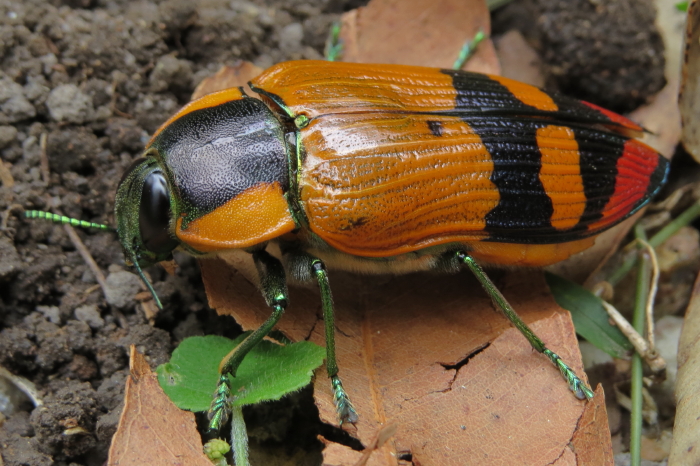
On a sunny afternoon, this Jewel beetle (probably Temognatha variabilis, subfamily Buprestinae) scrambled along the middle of our driveway. Quite a big beauty!
What I, at first sight, thought to be attempts to become airborne again (a laborious undertaking for such a big, heavy insect), turned out to be scraping movements it (she!) made with the end of the abdomen, presumably to lay eggs.
She didn’t get anywhere on that hard surface, but didn’t appreciate a softer, sandy spot, to which I carried her, and buzzed off.
The next day, I watched a similar (the same?) beetle fly in tight spirals up around the trunk of a large tree, down again and then it disappeared straight into the opening of one of our possum nestboxes. Is she going to lay eggs in there?
When we opened the garage door the other day, this young Brushtail Possum almost tumbled from the roof. It managed to hold onto the gutter and pull itself up again. It had chosen the narrow space between the corrugated steel roof and the solar panels before dawn as a sleeping place for the day, but there was more to the bargain ( how could it know, that it would be so hot at midday!).
He licked his arms, paws and the bare underside of his tail to keep cooler, at times he dozed off, but he kept tossing and turning until later in the afternoon. The piece of juicy apple we offered was eagerly taken!
Having recently separated from his mother, he is still learning what’s smart for a possum.
Other young animals are also on the move: we spotted a small platypus in the shallow section of our creek near the cabin. What a surprise! Our creek is not a permanent habitat for a platypus, as sections of it often dry up after dry winter months.
The Lumholtz’s Tree-kangaroo baby is still keeping close to its mother (I spotted them near the creek last week). It has grown considerably since this photo was taken by one of our guests (Geoff Collins) in November:
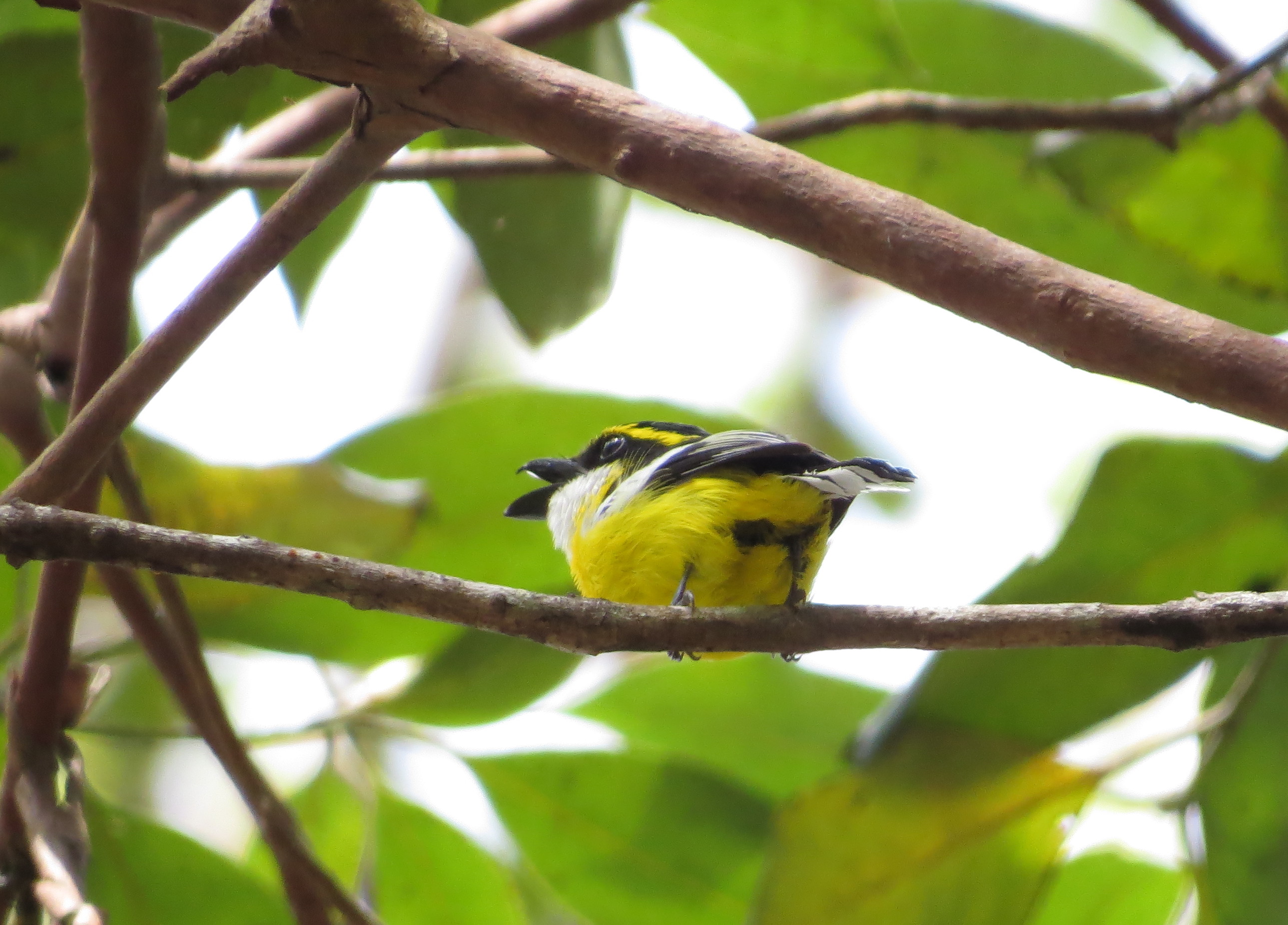
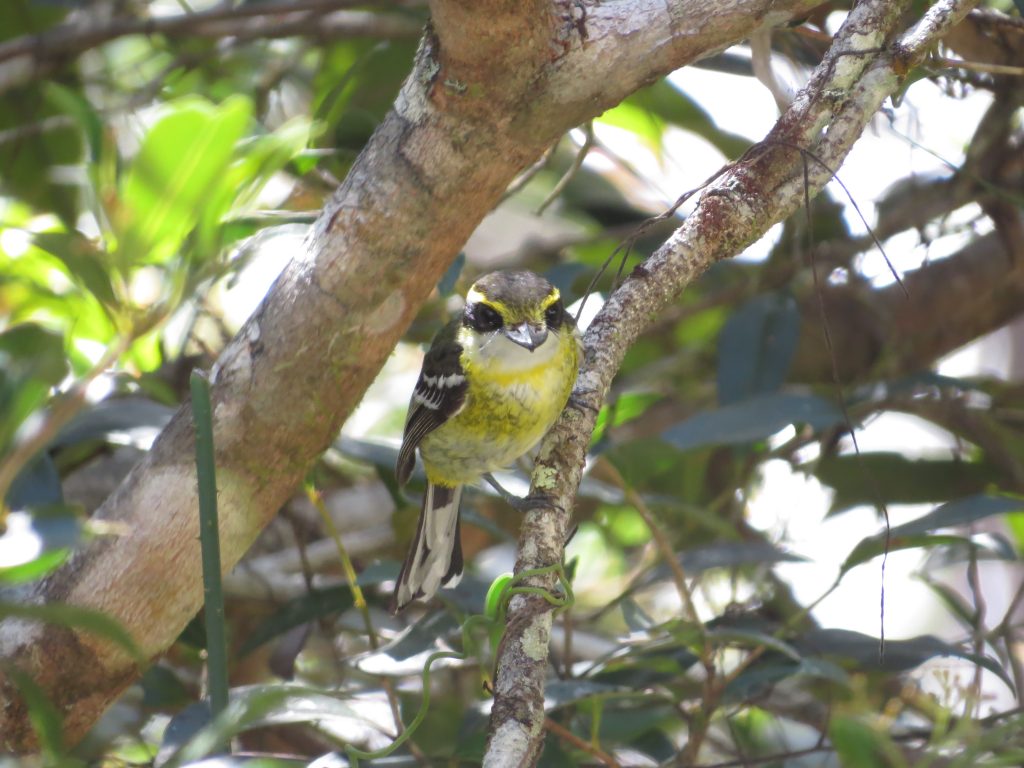
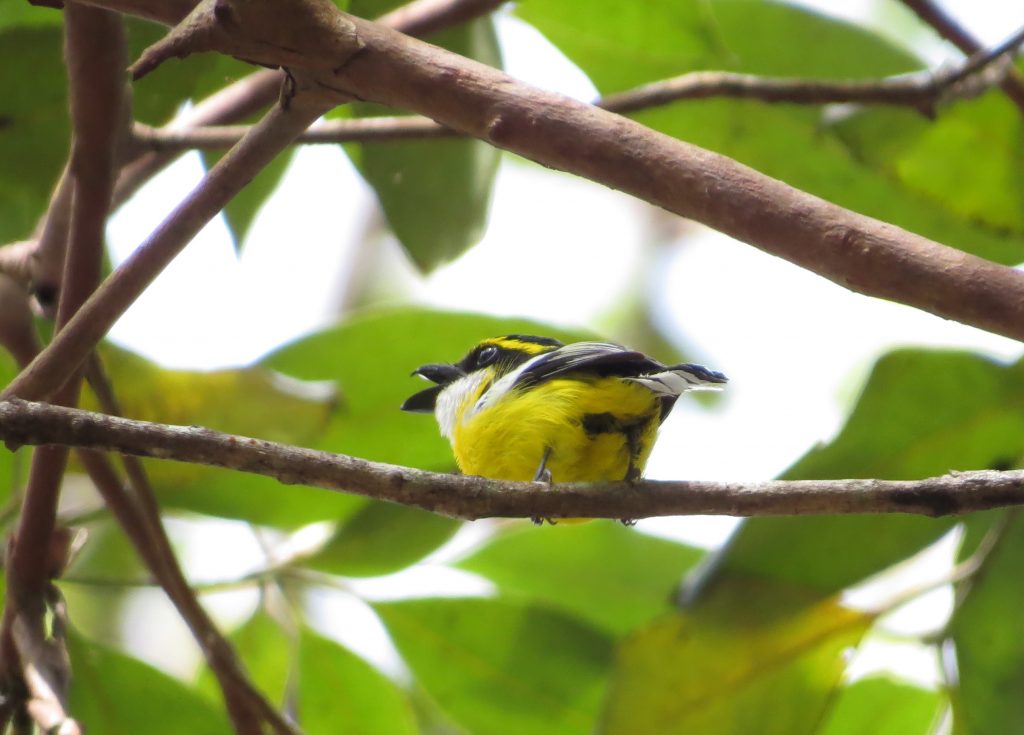
The Yellow-breasted Boatbill (Machaerirhynchus flaviventer) is a flycatcher with a distinctively shaped broad, flat bill.
This is a female:
And here is a male:
Once you recognize their call, it is relatively easy to locate them. Here in our more open forest they often call from lower branches, so they are easier to observe than in dense rainforest.
We had some good sightings of tree-kangaroos, too:This female stretched out for Acacia leaves, then she and her joey made their way into a Cissus vine.
Many birds are starting their breeding business:
Eastern Spinebills are courting and one of the females is picking up tiny bits of eggshell and fluffy nesting material, Bridled Honey-eaters are mating, Mrs Riflebird appears to be feeding a nestling (instead of eating banana on the spot, she is flying away with big chunks in her beak), there is already an immature White-naped Honey-eater coming to the bird bath every day, Eastern Whipbirds are travelling through the undergrowth with 3 offspring in tow, the list goes on.
Marsupials also are showing up with either extended pouches (Pademelons, Swamp Wallabies and Brush-tailed Possums) or babies on foot, like our Lumholtz’s Tree-kangaroo (see the previous blog).
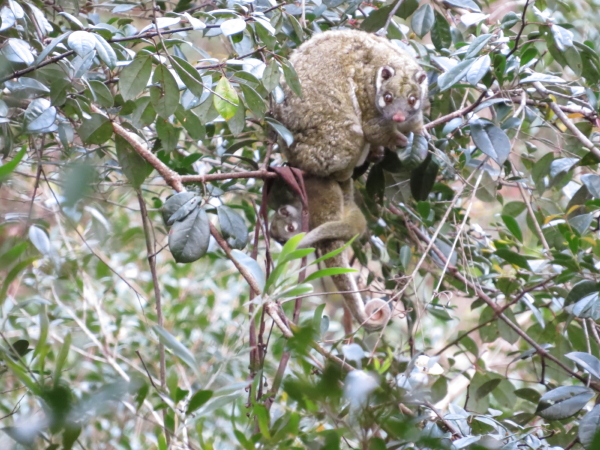
On Sunday we saw a patch of olive-green on top of a Cissus vine along our creek. That wasn’t a bit of flora, but a Green Ringtail Possum with a very small baby!
They were out rather early, while it was still light (they are normally nocturnal animals), but mum was probably very hungry, having to produce milk for her offspring.
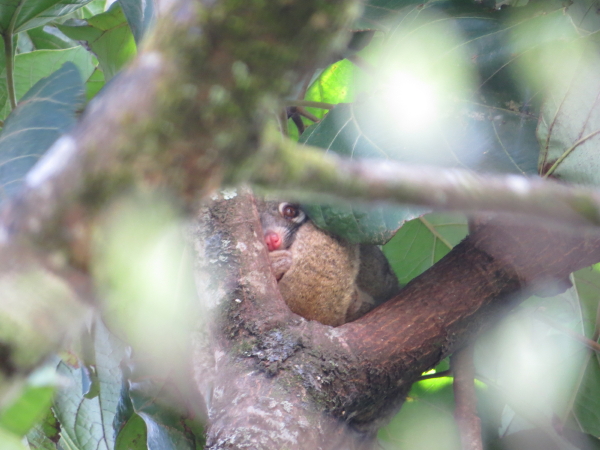
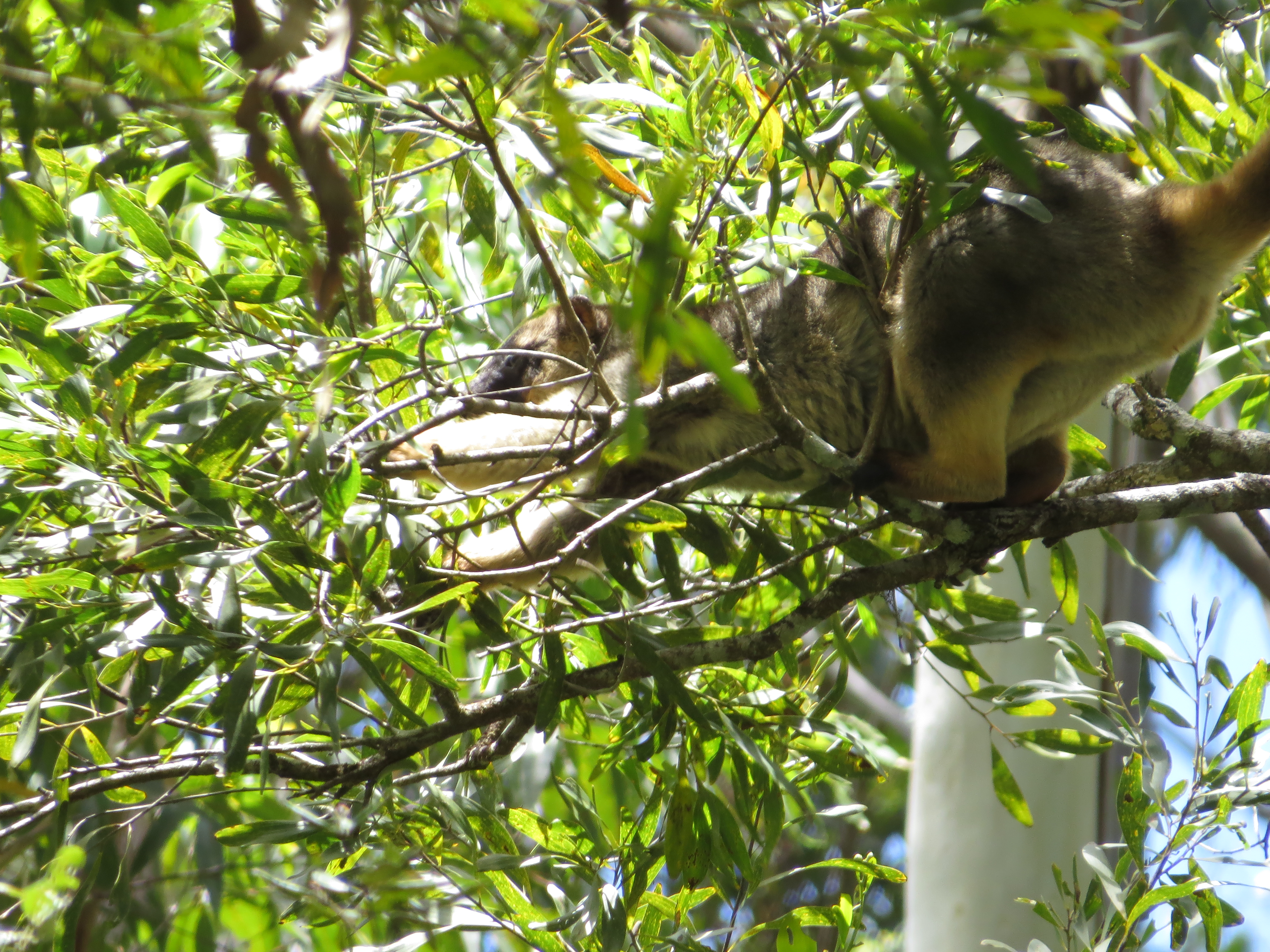
Green Ringtail Possums don’t sleep in tree hollows, like a lot of other possum species, but spend the day curled up in a tree, relying on their excellent camouflage, like this one:
The pink nose gave it away, though!
Ringtail Possums have a very prehensile tail, which they use like an extra hand.
They were both feeding on the Cissus leaves, which is a favourite with many possums and tree-kangaroos.
Every now and then the little one briefly made its way into the pouch for a drink:
A week ago we saw a tree-kangaroo in a small tree close to our cabin. It looked like the one which has been in the area for the last couple of months.
To our delight, she had a baby with her! It must have left the pouch only recently, and was eagerly climbing around in mum’s vicinity.
They were in a Red Mahogany sapling, a very suitable tree for practising: easy to grip due to the small circumference and the rough bark. Mum was feeding on Smilax leaves, one of her favourite foods.