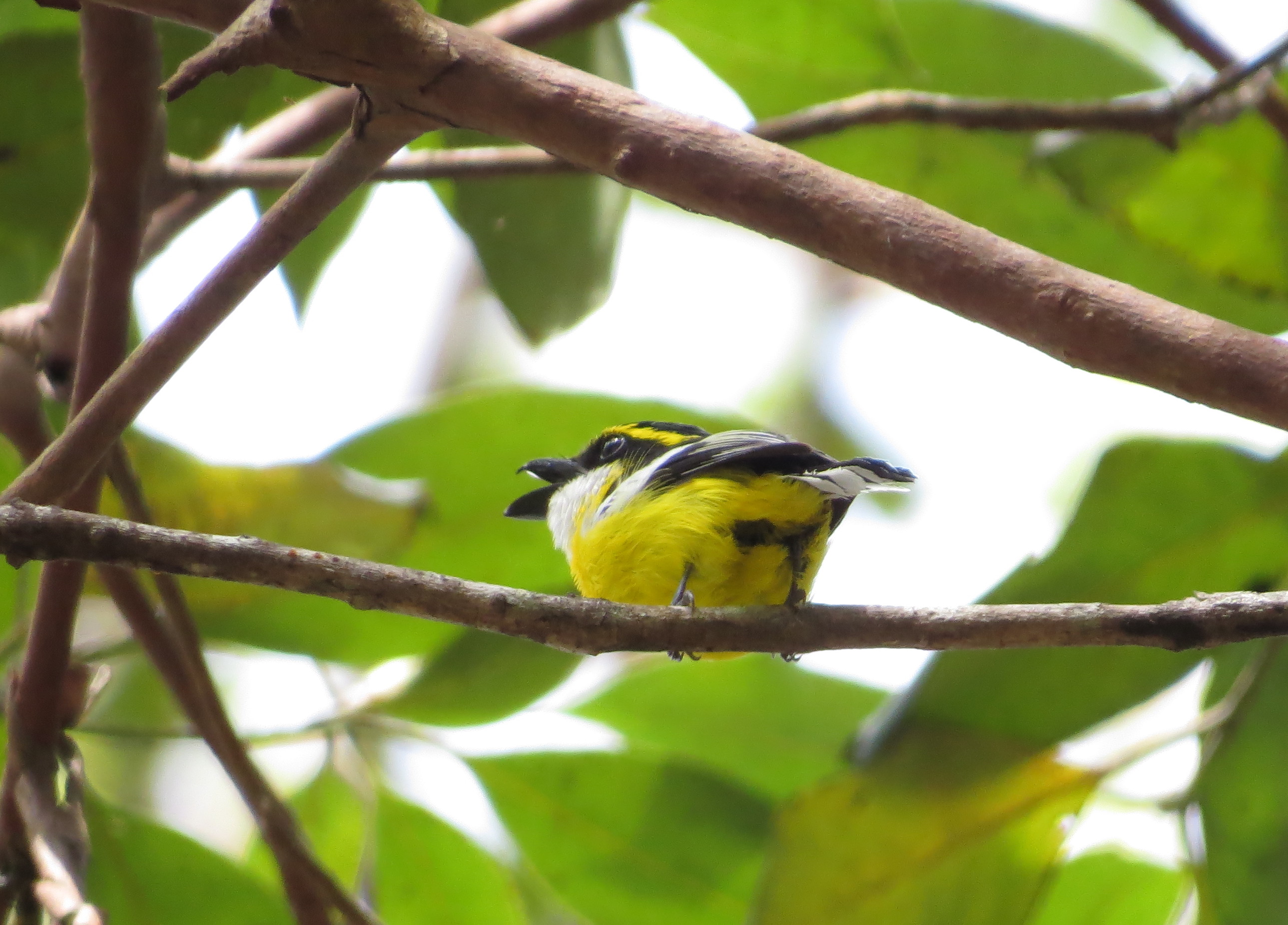
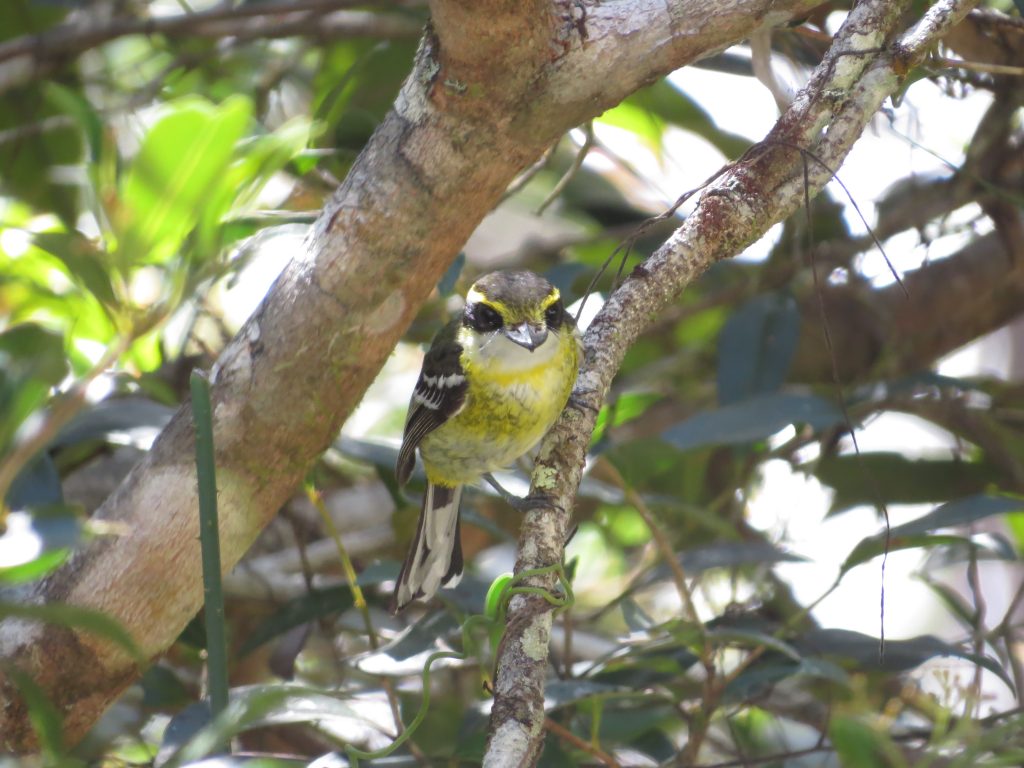
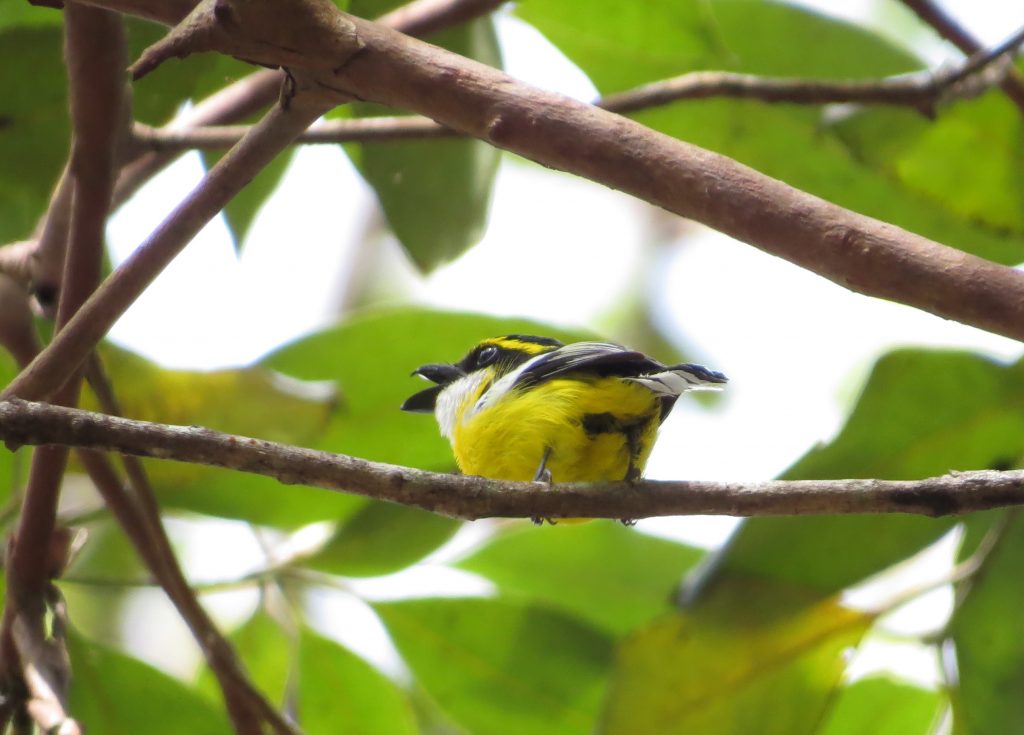
The Yellow-breasted Boatbill (Machaerirhynchus flaviventer) is a flycatcher with a distinctively shaped broad, flat bill.
This is a female:
And here is a male:
Once you recognize their call, it is relatively easy to locate them. Here in our more open forest they often call from lower branches, so they are easier to observe than in dense rainforest.
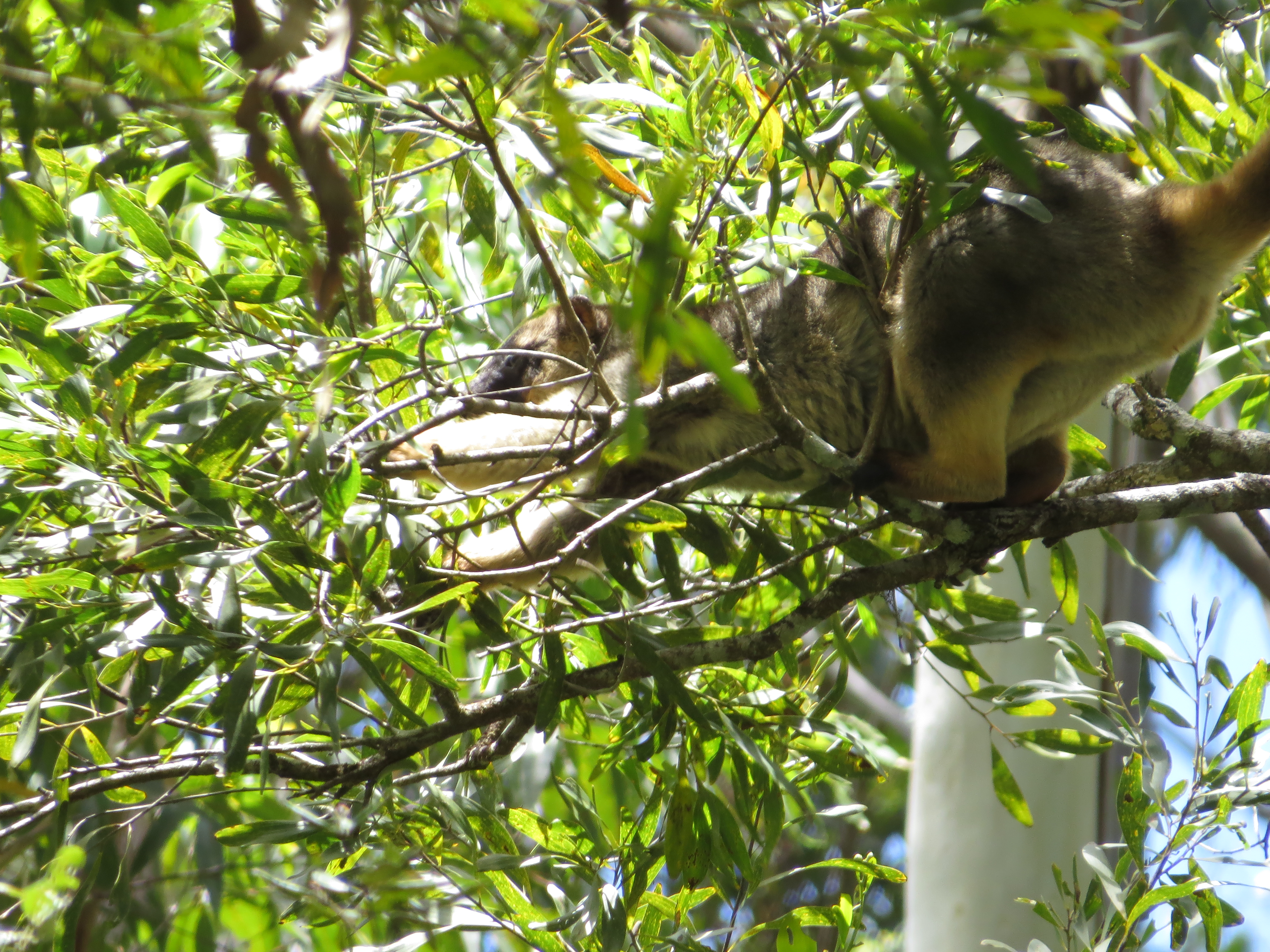
We had some good sightings of tree-kangaroos, too:This female stretched out for Acacia leaves, then she and her joey made their way into a Cissus vine.
Many birds are starting their breeding business:
Eastern Spinebills are courting and one of the females is picking up tiny bits of eggshell and fluffy nesting material, Bridled Honey-eaters are mating, Mrs Riflebird appears to be feeding a nestling (instead of eating banana on the spot, she is flying away with big chunks in her beak), there is already an immature White-naped Honey-eater coming to the bird bath every day, Eastern Whipbirds are travelling through the undergrowth with 3 offspring in tow, the list goes on.
Marsupials also are showing up with either extended pouches (Pademelons, Swamp Wallabies and Brush-tailed Possums) or babies on foot, like our Lumholtz’s Tree-kangaroo (see the previous blog).
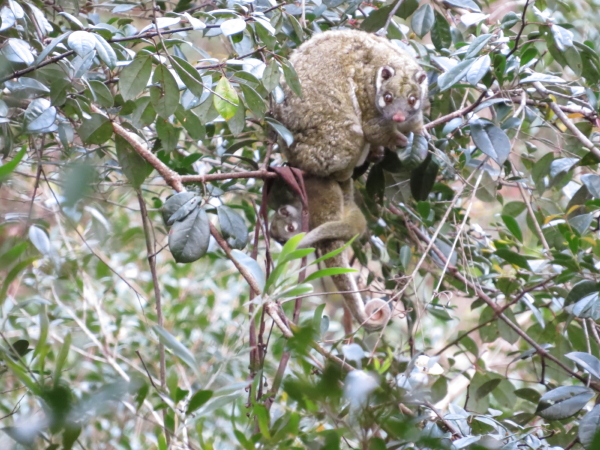
On Sunday we saw a patch of olive-green on top of a Cissus vine along our creek. That wasn’t a bit of flora, but a Green Ringtail Possum with a very small baby!
They were out rather early, while it was still light (they are normally nocturnal animals), but mum was probably very hungry, having to produce milk for her offspring.
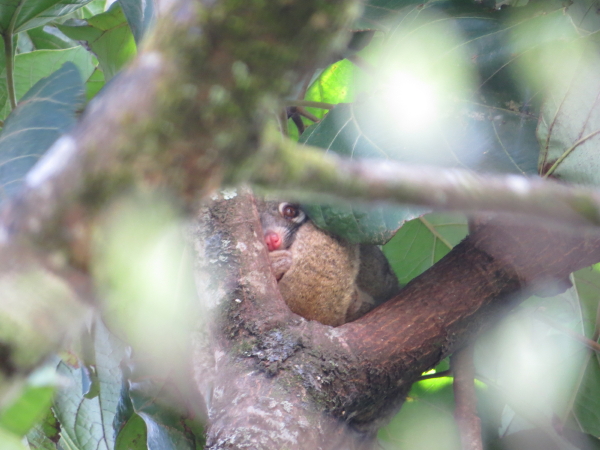
Green Ringtail Possums don’t sleep in tree hollows, like a lot of other possum species, but spend the day curled up in a tree, relying on their excellent camouflage, like this one:
The pink nose gave it away, though!
Ringtail Possums have a very prehensile tail, which they use like an extra hand.
They were both feeding on the Cissus leaves, which is a favourite with many possums and tree-kangaroos.
Every now and then the little one briefly made its way into the pouch for a drink:
A week ago we saw a tree-kangaroo in a small tree close to our cabin. It looked like the one which has been in the area for the last couple of months.
To our delight, she had a baby with her! It must have left the pouch only recently, and was eagerly climbing around in mum’s vicinity.
They were in a Red Mahogany sapling, a very suitable tree for practising: easy to grip due to the small circumference and the rough bark. Mum was feeding on Smilax leaves, one of her favourite foods.
Driving only 10 minutes west from our property in tall eucalypt forest takes you into a completely different habitat: open woodland, which is much more open, the trees are smaller (and, of course, different species) and the undergrowth is sparse, as it is much drier here.
There were many mistletoes in flower, attracting different species of honeyeaters, like this Yellow-faced Honeyeater.
Also rich in nectar are Grevilleas
and Melaleucas (Paperbarks)
One of my favourite flowers was in bloom, too: a Fringed Lily
Insects were still numerous, making the best of the sunny and warm autumn days.
These sawfly larvae are not caterpillars, but a type of primitive wasp. They were crossing the road, huddled together in the shape of a leaf. They frequently stopped, and started moving again as soon as the frontrunners started tapping their “tails’:
We are still busy, moving to our new property south of Atherton, but here is a first impression of our birdlife there. Erica and Mike, keen birders from the US, stayed with us in December, and took this footage:
It was very dry then, but since the beginning of the year, we’ve had more than 600mm of long-awaited rain. It brought out many frogs, including these Orange-thighed Treefrogs (Litoria xanthomera):